



If you’ve ever peeled off your boots at the end of a long day only to find your ankles looking twice their normal size, you’ve experienced the specific kind of leg fatigue that many women deal with daily. Whether it’s from pregnancy, a job that keeps you on your feet, or just a long-haul flight, that "heavy leg" feeling is a universal annoyance. This is where compression socks come in—and no, they don't have to look like beige bandages anymore.
The secret to how they work is a concept called graduated compression. Basically, the socks are engineered to be tightest right at the ankle and get progressively "roomier" as they go up the calf.
Think of it as a gentle, constant massage for your veins. Because our blood has to fight gravity to get from our feet back up to our heart, things can get a bit sluggish. The socks provide an external squeeze that narrows the veins just enough to help the blood move faster, preventing it from pooling and causing that familiar throb or swelling.
For women, these socks are often a total game-changer during pregnancy. As the body produces more fluid and the pressure on the pelvic veins increases, swelling (and the risk of varicose veins) goes up. A good pair of compression socks acts like a support system for your circulatory system, keeping the fluid moving and taking the literal weight off your feet.
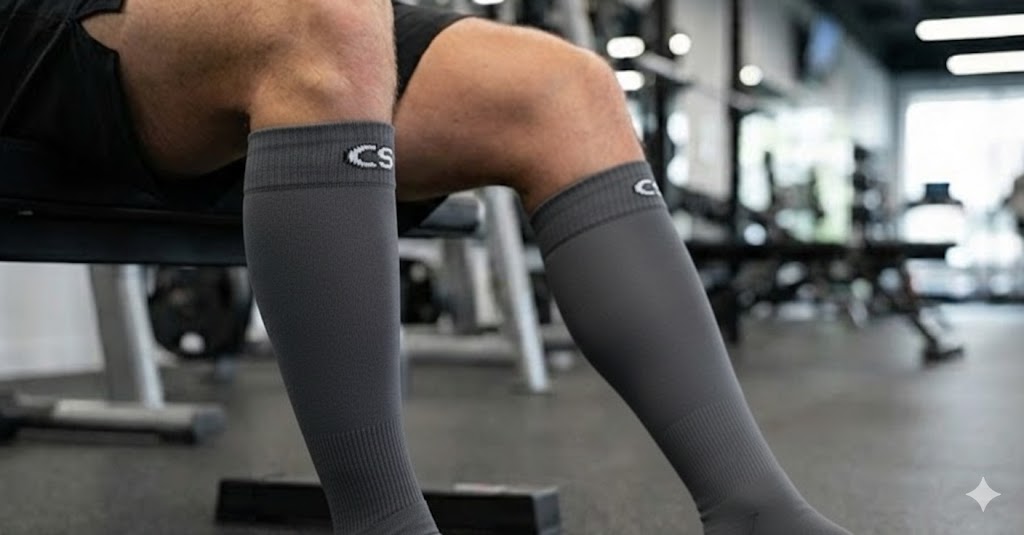
Beyond the medical side, they’ve become a secret weapon for fitness and travel. Many women wear them during post-gym recovery to help flush out the stuff that makes muscles sore, or on flights to avoid "economy class syndrome." The best part? The industry has finally caught on that women want style too. You can now find them in everything from sleek black and polka dots to high-performance merino wool that looks just like a standard hiking sock.
Choosing the right pair usually comes down to the "squeeze" factor. Most of us do great with a mild (15-20 mmHg) pair for daily wear or travel. If you’re dealing with more significant swelling or "spider veins," you might step up to a firm (20-30 mmHg) medical-grade pair. They might be a bit of a literal arm workout to pull on in the morning, but your legs will definitely thank you by 5:00 PM.
Ultimately, compression socks are a simple, low-tech way to keep your circulation in check. They’re less about "fixing a problem" and more about giving your body the assist it needs to keep you moving comfortably through a busy life.

Leave a comment